The Story Behind the Image:
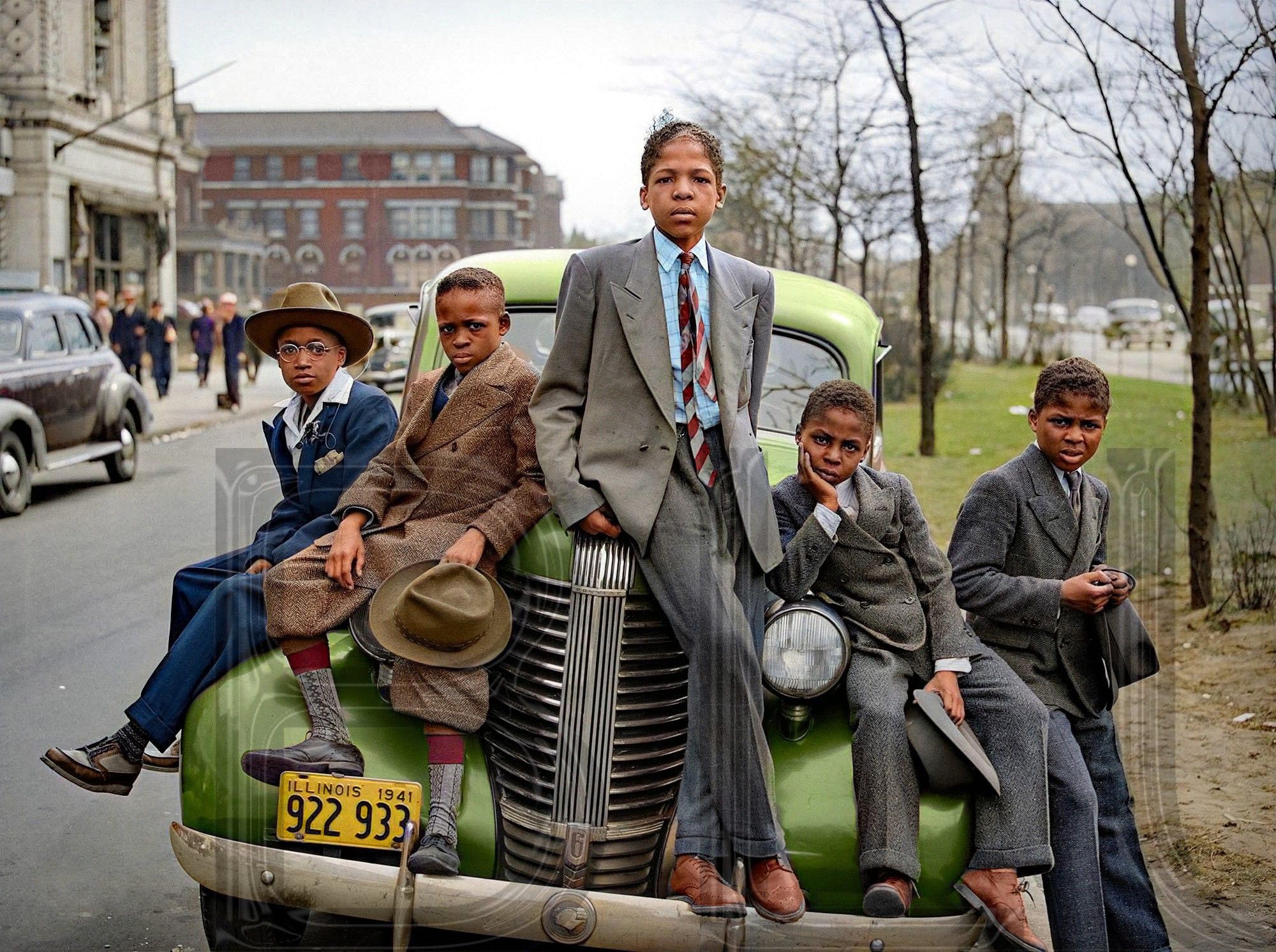
Taken on the South Side of Chicago—specifically in the historic Bronzeville neighborhood, across from the legendary Regal Theater—the photograph documents five youth dressed in their Sunday best, perched atop a Pontiac Silver Streak Six sedan. Their crisp suits, polished shoes, and confident postures speak to dignity, pride, and community life during the era of the Great Migration, when millions of Black Americans moved north in search of opportunity.
The tall, hatless 14-year-old youth standing proudly front and center has been identified as Spencer Lee Readus Jr. The identities of the other four boys remain an enduring historical mystery—a quiet reminder that behind every archival photograph are stories still waiting to be told.
Why This Poster Belongs on Your Wall:
This 8×10 print is more than a photograph—it is a window into Black life, style, and resilience in mid-century America. Russell Lee’s image captures the pride of a community and the promise of a generation, making it a meaningful addition for history enthusiasts, photography lovers, educators, and anyone moved by the human stories of the Great Migration.
Product Details:
– Size: 8×10 inches (standard frame size, easy to frame and display).
– Subject: “Negro Boys on Easter Morning,” five youth on a Pontiac Silver Streak Six.
– Photographer: Russell Lee, Farm Security Administration.
– Setting: Bronzeville neighborhood, South Side of Chicago, across from the Regal Theater.
– Date: Easter Sunday, April 13, 1941.
– Notable Detail: The tall, hatless 14-year-old front and center is identified as Spencer Lee Readus Jr.; the other four boys remain unidentified.
– Style: High-quality reproduction of the original historic photograph.
Perfect For:
– History buffs and students of the Great Migration.
– Photography enthusiasts and collectors of FSA imagery.
– Classroom, home, or gallery wall decoration.
– A meaningful gift celebrating Black history and Chicago’s cultural heritage.
*Note: As a reproduction of a 1941 photograph, slight variations in tone and contrast reflect the character of the original archival image.*