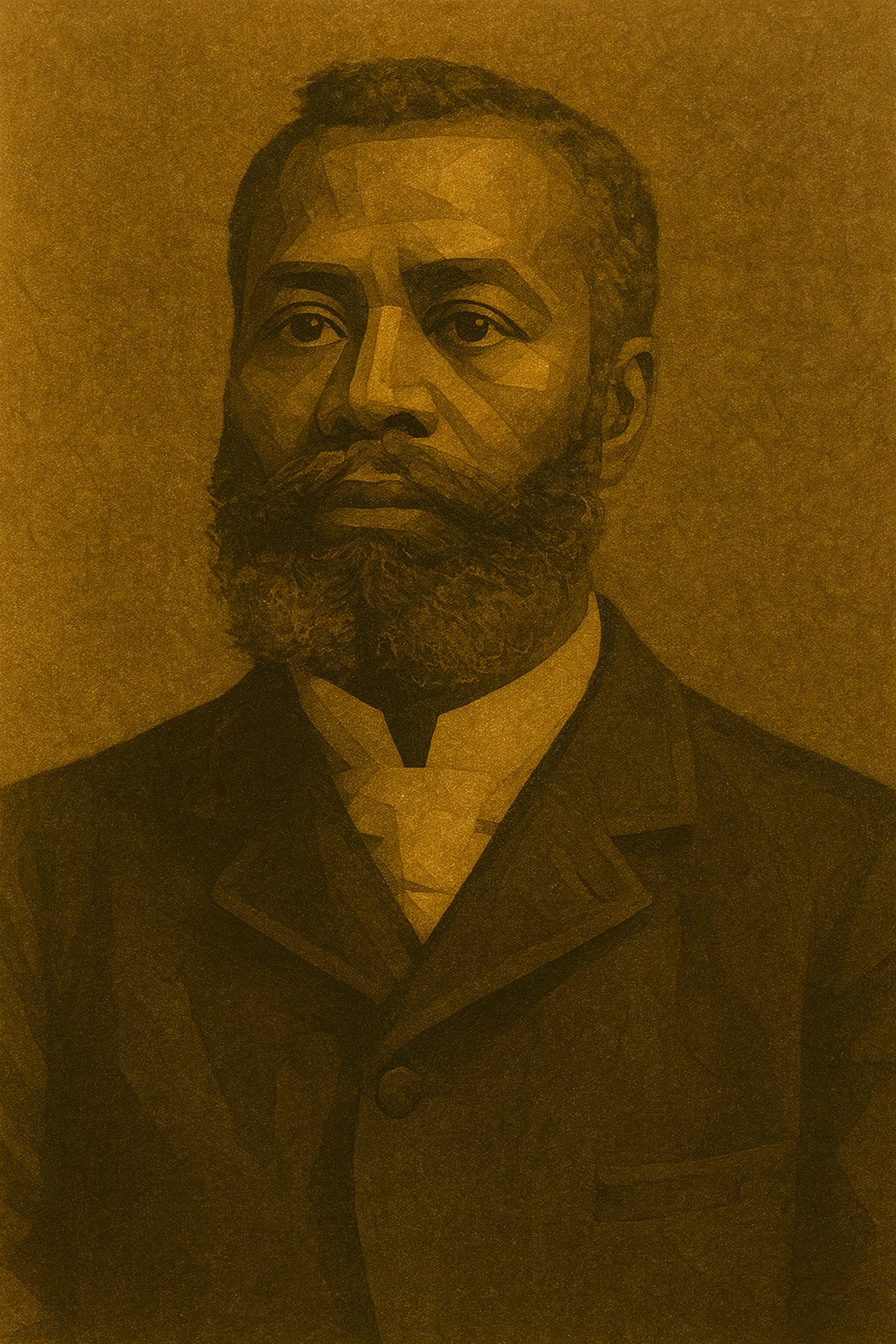
In 1872, machines across America still had to stop to be fed. Every few hours, a steam engine would grind to a halt so a worker could climb inside and hand-oil its joints — a routine so constant that factories built the downtime into their schedules. Elijah McCoy looked at that lost time and refused to accept it as the cost of doing business.
McCoy was the son of parents who had escaped enslavement in Kentucky and fled to Canada. He trained as a mechanical engineer in Scotland — and came home to find that, in the United States, the only work available to him was shoveling coal and oiling engines for the Michigan Central Railroad. It was a job built entirely around the exact inefficiency he’d spent years training to solve. So he decided to solve it.
An Engine That Oiled Itself
McCoy’s Improved Lubricator used steam pressure to release oil automatically, in small, continuous doses, while the engine kept running. No stopping. No worker climbing inside. The machine simply kept feeding itself.
Competing lubricators flooded the market almost immediately — cheaper, faster to manufacture, eager to ride the same idea. Buyers wanted the original. They started asking for it by name: “the real McCoy.”
The phrase outlived the machines it described. It’s still in use today, more than 150 years later, by people who’ve likely never heard of the man or the lubricator — proof that an idea can outrun its own invention.
Still Running, 150 Years Later
McCoy’s actual principle — infrastructure that maintains itself instead of waiting for someone to notice it’s failing — never stopped being relevant. It just changed shape. It’s the difference between a water main that gets fixed after it bursts, and one with a monitoring system that flags a problem before anyone’s basement floods.